image: thumbnail.jpg
Laboratory science to data science & the art of the growth gig | Lisa Elkin | Data Science Hangout
ADD THE DATA SCIENCE HANGOUT TO YOUR CALENDAR HERE: https://pos.it/dsh - All are welcome! We'd love to see you!
We were recently joined by Lisa Elkin, Senior Principal Computational Toxicologist at Pfizer, to chat about her career transition from a lab scientist to a data scientist, building Shiny apps for scientific audiences, and the value of internal programs for up-skilling and data literacy.
In this Hangout, we explore how to foster data science skills and build communities within a large organization. Lisa shares her experience with programs like an "Analytics Exchange," where employees could dedicate 20% of their time to working on data science projects from across the company, allowing them to learn by doing. She provides tips on how to propose similar "growth gig" opportunities to leadership, highlighting the value of up-skilling the entire department to increase efficiency and innovation without necessarily hiring more specialists.
Lisa also gives advice for starting a new internal community from the ground up, emphasizing the need for a few passionate individuals and the importance of repeating introductory sessions to support newcomers. Lisa runs a Data Science Hangout internally at Pfizer!!
Resources mentioned in the video and zoom chat:
🔗 Mastering Shiny Book → https://mastering-shiny.org/
🔗 Jenny Bryan - Code Smells and Feels Talk → https://github.com/jennybc/code-smells-and-feels
🔗 Posit Academy → https://posit.co/products/enterprise/academy/
If you didn’t join live, one great discussion you missed from the zoom chat was about what a "mainframe" computer is. The conversation sparked memories of punch cards, floppy disks, and how the cloud is in some ways a return to the mainframe paradigm. Let us know below if you’d like to hear more about it! Better yet, join us live on Thursdays :) pos.it/dsh
► Subscribe to Our Channel Here: https://bit.ly/2TzgcOu
Follow Us Here:
Website: https://www.posit.co
Hangout: https://pos.it/dsh
LinkedIn: https://www.linkedin.com/company/posit-software
Bluesky: https://bsky.app/profile/posit.co
Thanks for hanging out with us! 💛
Timestamps
00:00 Introduction
04:50 "What is toxicology?"
06:19 "What are the data types that your tool users are interfacing with?"
07:19 "What is an assay?"
08:15 "How does your science background benefit or disadvantage you as a data scientist?"
14:55 "What kind of audience do you build Shiny apps for and what is your workflow?"
18:05 "What made you decide to switch to industry and what were the bottlenecks between academia and industry?"
24:39 "Do you have any tips on proposing an 'analytics exchange' program to leadership?"
28:38 "What tools or systems do you use for sharing apps and what tools do you use daily?"
32:33 "How much oversight do you have on your analysis and do you ever get stuck in skeptic paralysis?"
35:18 "Do you have any podcast recommendations?"
38:01 "How can organizations resolve the tension between allowing employees space to learn and being productive?"
41:12 "What advice would you give to somebody starting a brand new community within their company?"
46:05 "Any resources for learning modular Shiny apps or tool building in general?"
47:40 "What is the career progression like for a data scientist and is it possible to grow as an individual contributor?"
Transcript#
This transcript was generated automatically and may contain errors.
Hey there, welcome to the Paws at Data Science Hangout. I'm Libby Herron, and this is a recording of our weekly community call that happens every Thursday at 12 p.m. U.S. Eastern Time. If you are not joining us live, you miss out on the amazing chat that's going on. So find the link in the description where you can add our call to your calendar and come hang out with the most supportive, friendly, and funny data community you'll ever experience. Can't wait to see you there.
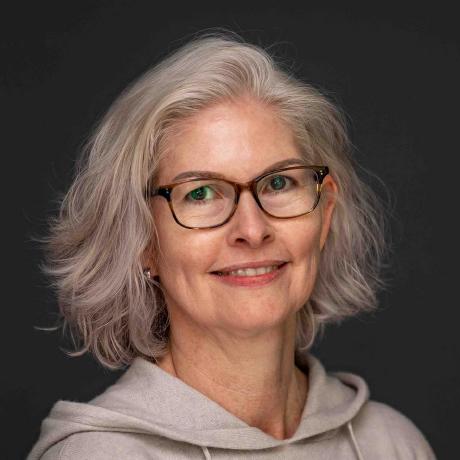
I am so excited to introduce our featured leader today. It's Lisa Elkin, Senior Principal Computational Toxicologist at Pfizer. Lisa, your title is a mouthful. Thank you for joining us. I would love it if you could introduce yourself. Tell us a little bit about you and what you do.
Sure. So I like to call myself a scientist turned data scientist. My background is in cell biology and biochemistry, and I spent about 20 years in the lab, most of that in the pharmaceutical industry in drug discovery. For those of you in the industry, I was in high throughput screening and hit assessment, which basically is like screening millions of molecules against a potential drug target of interest, and then working with programs to work with similar molecules to try and find a hit that can become a lead. So that's a really, really data rich area within drug discovery. And, you know, throughout my time in the lab, I always really enjoyed working with data. I love doing big experiments where I could just like amass a huge quantity of data to sit with for a while. And while I was in the lab, I had some really great opportunities to learn more data analytics as a part of my day job, both in training and working on projects. And then probably about eight years ago when my company closed their site, the site where I worked, I decided rather than relocate, I would reinvent myself as a data scientist. So that's what led me to my full time role here at Pfizer. And now I build applications to make scientists' lives easier.
I love it. And tell us something that you like to do for fun outside of work.
For fun. I recently started Pilates this year, which I really like. Yeah, I love it.
Oh, my gosh. Any other Pilates people in the chat? Let me know. I look at Pilates videos and feel fear.
It's just amazing for your core. I didn't remember I had a core until this year.
Oh, my goodness. Rachel says the hardest workout I've ever done. Yeah, I have a cousin who does Pilates and it's intense. All right. Well, I would love to give everybody a little bit of context building stuff for our questions so that we can ask Lisa amazing questions.
And so I wanted to just throw some topics out, some topics that I know Lisa would be great to ask about. One is her career journey, just the non-traditional, non-data science stats background, ending up in full-time data science. Another one is growing inside of your role, whatever your role is right now, into a data science role, getting experience for data, how to advocate that to your boss, maybe how to find other places to get data into your role. That would be a great thing to talk with Lisa about.
Another thing is being a tool builder. I love tools too. I am very tool focused. And so being a person who gets to build tools is very interesting to me and I know to Lisa as well.
There are also a couple of things that I know I would love to talk with Lisa about, like upskilling inside of an organization systematically, right? Like setting up processes and structures to help people upskill into data literacy and adding more data to their roles or becoming analysts. And then also knowing when to use AI and when to not use AI is another great topic that we've been talking about. We talked about this with Jenny Bryan as well.
Understanding toxicology and data types
All right, so let's get started with a couple of things here. I wanted to ask you a little bit about what toxicology is because you have this very long word in your title and I don't understand 100% what toxicology is. Yeah, so I work in preclinical drug safety in Pfizer. So this is basically early in drug discovery, we want to put the best molecules forward into the clinic. And so early in drug discovery, we're really trying to understand the potential safety liabilities. So it kind of starts very early. You pick a drug target and you try to understand like, all right, if we want to hit this particular enzyme or activate something, we want to understand what the potential safety liabilities are of doing that. So it comes down to sort of like researching what's out there. And then we do things like screen against known potential liabilities. So for example, we know certain small molecule drugs can affect ion channels in your heart. So we'll screen against those ion channels to make sure early on in a program, you're not putting forward a molecule that we know hits these ion channels, right? Things like that. All the way to what happens in animal studies when you expose an animal to a particular molecule.
Okay, so just to like help my own brain, what are the data types that people like your tool users are interfacing with? Yeah, a lot of different data types. And that's one of the reasons I love my job so much is I get to flex all over the place to different types of data. In the early target space, it's literature mining. We actually just built a tool that has an AI component that goes and pulls information from various pieces of literature. It's early screening data is running assays on instrumentations that dump out a file and you need to translate the numbers in that instrument output into some sort of potency determination. How potent is my compound against this particular ion channel in your heart? All the way to, in animal studies, there's lots of different data to measure to see how the animals are responding to treatment.
Awesome. That is very, very helpful. I feel like I see and hear the word assay a lot in biostats and I don't 100% know what an assay is either. An assay is like a test. It's sort of like you have like a teeny tiny little test tube. Now they're very small. You might think of a test tube as this big thing, but they can teeny tiny little test tube. You put a compound in, you put something you're testing like a cell or an enzyme or something like that. Then you watch to see what that compound does to the enzyme.
Science background as an advantage in data science
Okay. Awesome. Thank you so much. Well, I have a great question that popped up in Slido from Noor. Noor, if you're available, could you ask that one live? Hello. Sure. I love asking things live. Ask also, hi, a fellow computationalist, because I am a computational biologist slash biopharmacist actually trying to move into data science. This is actually tangentially related, but my question is, how do you think your science background benefits you as a data scientist? How do you think it can disadvantage you slash be in conflict with data science approaches? Because everyone says scientists are like, oh, so data science is like, not exactly. Right. For the longest time, when I got this role as a data scientist, originally my title was data scientist and moved to computational scientist. I didn't want to put it in LinkedIn because I would get all sorts of requests. I'm like, well, I'm really a scientist. I don't want to call myself a data scientist yet because I'm not ready. I think being a scientist in the job that I have is really an advantage. I think that's the strongest thing that I can bring to the table is that I understand what these scientists need. I know how they want to look at their data. I was there once 10, 15 years ago. I didn't know what a relational database was. I can understand what is going to confuse them and what works with the way that they think. Because I know the way that they think, I can build tools that work that way, that aren't overwhelming, that think the way that they think. I think that's what I bring to the table most. My data science skills, I'm rapidly trying to bring up to speed.
I think that's the strongest thing that I can bring to the table is that I understand what these scientists need. I know how they want to look at their data. Because I know the way that they think, I can build tools that work that way, that aren't overwhelming, that think the way that they think.
Yeah. I think that's it. Go ahead. Was that good? Yeah.
I think that's a great answer. I see you're nodding. This also brings up the topic of imposter syndrome. We're dancing around this. I don't really love the term imposter syndrome, but it's what everybody identifies as. I call it unnecessary feelings of inadequacy, because you're a very smart and accomplished person, and yet you have this thing eating at you telling you that you're not adequate. I'm going to put a poll in the chat, actually.
I think that was the second part of the question, was where are the disadvantages? Yeah. I don't know disadvantages, but I don't have the formal training that some of the data scientists have on my team. I'm not sure if I'm actually an imposter or I have imposter syndrome, but sometimes I feel like, wow, compared to these guys, what can I bring to the table? I think everybody in our team brings something to the role. We have a mix of... Most of the team has a background in biology, but some are much stronger in data science than others. I think we all bring something to the table. I guess I bring 20 years of experience in the lab in different roles. I'm hoping that helps. People are often very happy with what I give them in terms of tools. I guess I have, but I do have imposter syndrome. But I'm not immune. I'm great, but I'm not immune.
Yeah. I think that being a person who has had to use the tools, especially when the tools were not as good, makes you the best person to build the tools, because then you can advocate for the users in a way that somebody who's coming in and who's superficially learning about end user processes could never, because they've never been in the trenches and suffering the way that you have or frustrated. That was a great question, Nora. Thanks for asking. I am looking at our poll, do you feel imposter syndrome or feeling of inadequacy? The vast majority of us so far absolutely feel imposter syndrome. Whether we have a background in stats and data or we don't have a background in stats or data, the majority of us are saying, yep, I still have imposter syndrome. Good to know. That makes me feel better. Yeah. We're not alone. While we're at it, let's ask another question, which is, do you even have a traditional background? Where are we all? Are we traditional background people or nontraditional? I think I'm nontraditional. Lisa, you think so too, right? Yeah. Nontraditional. Yeah, I did not have the background. When I was in college and I took a stats class where you had to program, you had to go to the mainframe lab to do any programming.
That's how. Like I said, I didn't know what a relational database was not too long ago. There are probably people in the chat who do not know what mainframe is even. You have to go to a room with computers.
I have worked for companies in the past decade who still operate some of their stuff on mainframe, so it's not gone. Lisa, do you want to explain mainframe a little bit? Actually, this might be. All I know is that we didn't really have personal computers. We just had personal computers where you stick one of those floppy floppy disks into the thing. There wasn't coding without going somewhere that had the compute power to support that. It's like an enormous computer in a centralized location that everyone needs to go to in order to access or operate. Not exactly as a supercomputer, but computers also had to be a lot bigger back then than they do now. Computers can be a lot smaller. Our compute has gotten bigger and smaller at the same time, which means that 20 or 30 years ago, it was huge and a lot slower. There are probably going to be some mainframe descriptions that are better than mine in the chat right now. Hopefully, somebody will walk us through that in the chat.
Thank you, thank you, thank you. It looks like our poll on, are you traditional or nontraditional? More nontraditional than traditional. I'm considering myself nontraditional, even though I have two degrees that are data-focused. I didn't get to do that until I was in my 30s, so definitely a winding path.
All right, let's head over to our questions, because I see that Dami asked one about Shiny apps. Dami, would you be available to ask that live? Of course.
Hi. Hi, Lisa. I know you build a lot of Shiny apps for your work, and I was just wondering, what kind of audience do you build it for, and what is your workflow, your thought process when building one?
Yeah. Mostly for scientists, but different kinds of scientists. In vitro scientists who work with assays in TestTube, they're used to a lot of data. They tend to have to do some data analysis themselves. That's one person that I work with. They're pretty data-savvy, but they don't know how to build an application that's going to automate analysis for them. In that case,
those apps that I've built, I rely heavily on my experience as a scientist and what are the steps that I use to analyze that data, and what do they want to see? I think about it in terms of a workflow. Some of the apps that I build, I'm learning to build modular Shiny apps. I am still learning, but I like that approach because I can pick and choose different modules depending on the situation. I can reuse modules potentially. A lot of the planning just happens in my head.
I know you should write things down and map things out in terms of what you want to do. So far, sometimes I keep that in my head. Occasionally, I have mapped data flows, like, and I don't use anything fancy. I'll grab a PowerPoint and sort of like, all right, where are my data sources? Where are they coming from? What are the steps and the data transformations that I need to do? Sometimes I do that just to explain what I'm trying to do to other people, other technical users. Sometimes we've collaborated with outside vendors on particular projects, and in that case, it really helps a lot is sort of just mapping out the data flow.
Yeah. Anybody else pencil and paper their first step to anything? That's me, mapping out everything. Yeah, I do do a lot of scribbles. Yes. I have aspirations to keep a really nice notebook, and I tend to just do a lot on scrap paper and doodle at the same time.
Marlene is holding her notebook up. I'm like, yeah, let me just hold my pile of scribbled stickies up for you because I can't operate without them. Great question, Dami. Thank you for asking, and let's head over to Slido and find another question. I see one from Cecilia, and it's got an asterisk next to it. That means, hey, let me read this for me. So I will read from Cecilia Bartoli. What made you decide to switch to industry? What were the bottlenecks in your understanding between academia and industry?
Switching from academia to industry
Yeah. Okay, so this was a long time ago, but when I was in my probably second year of my postdoc, I always thought that I would go into academia, that I would be a professor somewhere. My mother was a professor. That's the life that I knew, but I realized I would kind of have to move all over the country in order to go where the jobs were, and so at the same time, there was sort of a biotech boom out in New Haven, Connecticut near Yale, and there was a professor who was starting up a biotech, and I joined that just thinking, well, I'll see what it's like. In retrospect, over the last 20 years, I realized, wow, I am actually much more suited to industry than academia.
First, because I really like variety. I get bored. There are people I postdoc with who still study the same molecules that they studied 20 years ago. I'm like, I can't believe that. Maybe I don't have the attention span. I think I tend to be like a jack of all trades rather than master of anything, and I find that in the pharmaceutical industry, there's a lot of different variety. There's the ability to move around. You're very goal-focused. It's very practical, and I feel like that suits me, and I'm also very process-oriented, just like in building tools. It's sort of like, how are you doing this process? Is it efficient? Are you walking back and forth across the lab? Do you have to transfer a USB stick from one computer to the other? Are you copying and pasting into Excel? That all sort of like, for some reason, that suits me the way that I think, and my sort of drive to fix broken processes.
That's very fair. The question, what are the gaps? I feel like because I went into a small biotech company, I kind of learned on the job. You have to get used to a lot of meanings, but that didn't happen right away. That wasn't at biotech. That was mostly pharma, and carving out time for yourself to think and to continue to learn. We talked about this a little bit, Libby, is continuing to grow and upskill while you are doing your day job.
That has really helped me get where I am, even moving from the lab to data science. I love learning. I'm not happy if I'm not learning, basically, but carving out that time can sometimes be hard.
Internal programs for upskilling
I had some really great opportunities, both at the last company I worked with, Bristol-Myers Squibb, and this company at Pfizer, in joining programs that were enterprise-wide programs for learning. When I was at Bristol-Myers Squibb and I was still working in the lab, I had the opportunity to work with a group called the Analytics Exchange, which was basically a program you could apply to where you would learn data science skills, but also work on projects. People from across the company, from commercial to clinical to manufacturing, would submit little projects, little analytics projects, a challenge that they had. Basically, different teams on this Analytics Exchange could work on those projects and learn by doing. That was my real entry point into data science.
Those projects and learn by doing. That was my real entry point into data science.
So, as a part of that project, your manager had to approve your participation in the Analytics Exchange and carve out 20% of your time to do that. You're not always that lucky.
At Pfizer, we have something similar. There's a large-scale enterprise-wide program, and there's also a smaller-scale program where I really learned R beyond what I had done previously. It sort of didn't stick the first couple of times because I didn't have a project to apply it to.
In my current department, we have computational sciences community where we invite people from across the department who want to upscale in data to work on mini-projects for a half a year at a time where they're asked to do the coding. So, they'll learn something, like the first projects maybe just learn R a little bit and make a tiny little reproducible analysis or something. Then, there'll be other projects where you're an apprentice. Eventually, the apprentices become mentors for the next wave.
I feel like you said in some of these, you got to practice project management as well. So, if you were not a data scientist type, you were like, I kind of want to go try managing a project. You could do that in these types of programs. I just put a thing in a poll in Slido asking if anybody has something like this at their company, an analytics exchange type of program, and 87% said no. So, if they wanted to propose this to leadership, could we do this? Do you have any tips?
Yeah. I think what we've done on a small-scale in my department, I mean, we have 10 people in our computation. Maybe that's a lot of computational toxicologists, but we have a department of like 400 people, 500 people. We proposed this growth gig opportunity by going to management and explaining, like, we have so much work as a computational group, we can't get to everything, right? There are things that our leadership really wants us to do, like spearhead AI initiatives, things like that. Well, if we're building tiny little dashboard apps and helping people with simple analyses, we can't, but we can't do everything.
And so, one of the things, there are people, I'm sure all of you know as well, that there are people who are technically savvy, but maybe just haven't had the background in data science. I was one of them. So, this allows people to bring their own problems to the computational community and say, hey, here's a little project that I've been working on, can you help me? We help them build their little app or whatever, and they're upskilled now so that they do their own little projects. And so, to management, one of the biggest justifications for doing something like this is you upskill your entire department or those who want to grow in the data science area, and we can do more without hiring more computational science. You don't necessarily need someone who does predictive modeling to build a small dashboard app that is based on a single document or something like that. So, I think that's the strongest argument.
I think that's great. Have you ever heard the phrase, oh, what if I upskill my team and then they leave? And the response being, what if you don't upskill them and you stay? Yeah, right. I mean, there are plenty of pockets where you have people wasting so much time doing things because they don't know any other way, and they don't have time copying and pasting Excel or copying data that exists in a database out of a PDF printout, where they'll spend hours and then add hours of QC on top of it because someone copied and pasted.
And the entire department, by tackling these process challenges, creates more room for innovation because maybe you don't need 10 people for QC. Maybe you need five people for QC tests, and then you have five new roles that you can move over to something innovative, building novel assays to avoid having to use animals in preclinical studies, things like that. So, I think it's a benefit. I mean, I love working for this department at Pfizer. They understand that concept entirely, so I'm very lucky.
What if I upskill my team and then they leave? And the response being, what if you don't upskill them and you stay?
Tools and publishing apps
I love it. Well, I have some other questions about Pfizer for you, but let's hop over to Slido first. And I saw that Inger had asked with an asterisk, so I'll ask it, something that an anonymous question also asked. And it's just, what tools or systems do you use for sharing, disseminating, or publishing the apps that you build? The anonymous question was, what are your tools that you use on a daily basis? So, let's have a little tool chat.
Yep, sure. So, now I use R and Shiny entirely. There are other people on my team who are Python programmers. There's a couple Python programmers as well. And Pfizer, we're lucky that our department doesn't really have to think too much about it because there's an enterprise-wide group at Pfizer that takes care of basically standing up the platform, Posit Workbench platforms, RStudio Connect for publishing our Shiny apps too, things like that, where we don't have to worry so much about that because we have the support from our digital organization on that front.
As far as tools go, I did not start my data analytics journey in R. I actually started when I was in the lab using a tool called Spotfire, which I don't know if people have heard of or not. It's a low-code tool for data analysis and visualization. You might have heard
of Tableau. Spotfire is like a souped-up Tableau. You can do more with Spotfire than you can with Tableau, in my opinion. You can do a little Python, a little R inside Spotfire, but it has kind of standard visualizations, things like that. You can do data transformations and everything.
And that was a great entry for me. I don't think you necessarily have to start there, but it was a great entry for me to understand a little bit about how a SQL query works or how you do joins or the things that you need to kind of keep in mind as you're doing data transformations. That was really helpful for me. That's actually why I was hired at Pfizer, because I knew Spotfire. The initial group that I joined within drug safety was looking for Spotfire developers. Interesting.
Then while I was here, so there was a data operations group and there was a computational group. I saw the computational group. I'm like, oh my God, those guys are scientists. They know programming. I want to do that. They happen to have this growth gig thing, which I- Growth gig.
That's what, it's like sort of like Pfizer's version of the analytics exchange. It's not as, it's more on an individual group basis where you post a growth gig and if people are interested, they can apply for the growth gig. Then you work with your manager and the growth gig manager to determine how much of your time you're going to spend on the growth gig.
I like this. I think we're all going to go out and ask. Other departments, if we can do growth gigs now. Yes. It's sort of like a tiny little sabbatical while you're still doing your day job. Yeah. Just carve out a little chunk of time. I put a link to what I think is Spotfire in the chat if anybody wants to go check it out.
Oversight and quality control in pharma data science
Yeah. Thank you, Inga and anonymous asker for great questions. Edward Leland had a question, a couple of questions in there actually. I will see if Edward is around to unmute and hey, would you like to ask one of your questions? They're quite long, so if you could pick a single question. Thank you.
I'm a wordy person, so I think I'll go with the most upvoted one. You work in an industry where the direct results of your work have a pretty direct effect on people's health and life. First of all, how much oversight do you have on the results of your analysis? Do you ever get stuck in skeptic paralysis, like triple checking your stuff being like, oh my God, if I've done it, is someone going to die? Or is that just me imagining crazy stuff?
Yeah. I think the thing is you can imagine it's like a giant machine with a lot of different gears, right? There's a huge amount of time something takes to get through the pipeline from sort of like, hey, I have this idea of what could be a good drug target to submitting it's called an IND to say, we're going to do a clinical trial with this molecule.
And so it's nice, right, that your work has such meaning, but it takes a village to make this sort of thing happen. Yes, there is a lot of oversight in terms of the QC of data that goes into regulatory submissions and things like that.
But I don't know, in some ways that's sort of the, I don't love documentation, but it is sort of nice to be able to take the time to document how you're doing a process to validating or qualifying that your analysis is correct, right? There's sort of like, there's a piece to that where a lot of what we do, we have to follow this sort of process where we've kind of verified on, you know, multiple different test cases with different analysis tools that we're getting the same answer, basically. That's part of how we kind of like control for that.
There is a lot of oversight. In some ways, it's nice in that, especially something like code review, which is, you know, in discovery research, we don't do it a whole lot, but the later you get, the closer you get towards the clinic, there's much more, you know, review of your code. It can make you a better coder too. So I think, maybe that's just the life that I've always lived.
Podcast recommendations
I think that that covers it. Thank you, Edward, for asking a great question. All right, let's head to Slido. There's so many interesting conversations that are happening in the chat right now. And Cecilia had asked, do you have podcast recommendations? So I thought I would throw that out there because we are all answering it in the chat right now. Lisa, do you have any?
Let's see. I did have a bunch. I was listening to one very good one on AI. And they don't have to be data related. They can be anything. Gosh, there's so many. I love Cautionary Tales is one podcast. It's basically a podcast that he will tell a story about some disaster that has happened, like, you know, a ship running aground or a plane crashing or some corporate disaster. And then he'll sort of dissect how that happened, how that got to that point. Like, what are all the sort of like the things that happened and what are the human factors that went into that? And then what lessons can we learn from that? That's a great one.
Similar vein, pilot debrief, plane crashes. But what happened that led up to that? And sort of like, what are the factors that went into that? I guess that's the theme. The theme here is also like problem solving and mystery solving. Yeah, that's a very data science thing. All right. Well, AI chat. I have to add that one. I'll add that one as well.
Chat GPT, AI news, artificial intelligence, Jaden Schaefer, J-A-E-D-E-N-S-C-H-A-M-E-R. That's a good one. He's really young. I get a lot of good stuff out of that.
Awesome. All right. Thanks for asking, Cecilia. We had so many recommendations in the chat, so everybody go take a look. By the way, you can save the chat at the end. Just click the three dots in the top right of your chat box. Arsenis had a question in Slido. I will highlight it for everybody so they can see it at the top of the Slido. And Arsenis, if you're available to ask that, that'd be great.
Balancing learning and productivity at work
Thanks, Libby. And thank you, Lisa, for joining us today. You talked about something earlier today that really struck a chord with me, which is you always want to be learning. If you're not learning, you're not happy. I've said that many times myself to managers.
My question to you is, do you think that there's an easy way, a neat way for organizations to resolve the tension between allowing employees the space to learn and be creative and do all that kind of stuff and be productive? Those things are in tension because there's only so many hours in the day.
Yeah. I have been very lucky because at both Bristol-Myers Squibb and Pfizer, there have been these larger initiatives that you have to recognize at the management senior leadership level that these kinds of things are important for competing for other employees. But I think one of the biggest things right now is every senior leader wants us to do more with AI. It's like, well, then upskill your people because there's only so many out there. You can do a lot if you train people.
I won't say that when I'm learning, every person that I know who has been in one of these growth gigs or analytics exchange who has been really successful has learned outside of normal working hours. For me, that's just part of who I am and what I do for fun. But I don't have young children anymore. I imagine it's harder for a lot of people to carve out that time on the weekend or at nights or whatever.
every person that I know who has been in one of these growth gigs or analytics exchange who has been really successful has learned outside of normal working hours.
I think the biggest thing is you can try grassroots within your own department to even spin up one of these kind of things where you've got these little groups that work on small projects together. That was a great way to do it. Or even like a couple Lunch and Learns, maybe a Lunch and Learn series is good. We have done at Pfizer, there's also sort of, I didn't mention it, I meant to, there's an enterprise-wide R community. We have R Hangouts. Just once a month, we do exactly what this is. Mike Smith, who heads the R initiative across all of Pfizer, has brought a small team of people together to start these initiatives.
Some of them is like, if you don't have this, maybe try to start something. Maybe start small, but if people see that you're successful, you bring it as a use case in front of a larger group and say, hey, this is what we did in our small department, and now we have 20 people who can do this more advanced analytics work instead of just three.
Building internal communities
I agree. Rachel had a good follow-on to that. Rachel, did you want to unmute and ask? I will highlight Rachel's question in Slido. I love that Pfizer has their own internal data science Hangouts. I think that is so cool. I was just wondering, because a lot of people will ask me about starting their own community within their company, and because I'm not doing it within Posit, sometimes I worry I don't have the best advice for them. I was wondering, what advice would you give to somebody that's just starting a brand new community? What has been most useful for Pfizer?
It's interesting, because I do think starting small really works. It makes you very agile to do whatever it is you want. It can be a casual lunch thing, but when you want to scale up, getting people engaged sometimes is hard. I think that's the hardest thing is that we all have day jobs, so it's very hard to devote the time. You need a few passionate individuals who are just like, yeah, I totally want to do this for fun, and then bring people along.
Understand that some people will engage for a couple of months, and then they'll go away, and then they'll come back when their workload has dropped down a bit, and that's okay. You continue to repeat things, I think. As we get more and more users at Pfizer, we continue to have these ... Every once in a while, we'll have a getting started session so that people don't feel so overwhelmed. It's also about building a support system that grows. Like we were talking about with Analytics Exchange, where you have apprentices who become mentors.
That same thing happens with our community at Pfizer, where we might take, for example, a Posit Academy course. Well, the people who go through that course can become mentors for the next time, so you're creating a pyramid scheme of mentors.
It's nice to have ... We modeled this. I shouldn't say we. I did not create this, our community. In fact, I took over from Natalia, who left Pfizer for another awesome job, but Natalia, she may be on here, she was great. She's like you guys, just totally engaging. It helps to have someone who can really engage the audience and have fun, like the chat. Like it brings a human aspect to something. Even if you're like 150 people on a chat, you feel like you start to get to know people.
I was just laughing. I was on mute. I'm glad I was on mute because I was laughing as you were saying, Posit Academy is a pyramid scheme. It's not a pyramid scheme, I promise. Oh God, I didn't mean it like that. No, I meant in a good way, but in a good way. Posit Academy was fantastic for me because I always felt like I was missing something. I was. I learned a lot through Posit Academy, but I never had formal training. Mike was kind enough to find me a spot on Posit Academy. I loved it. The teachers are so good.
It's great that you mentioned the apprentice mentors though, because I learn the most when I am helping other people learn, when I am teaching. If I come to a course or a section that I need to teach and I know nothing about it, I will learn more from that experience than I would if I took the course on it. You need to be able to explain things. The ability to do that
I learn the most when I am helping other people learn, when I am teaching. If I come to a course or a section that I need to teach and I know nothing about it, I will learn more from that experience than I would if I took the course on it.
for later cohorts, I think is just amazing with Posit Academy. The nice thing about Posit, you watch what happens during the course of your team's journey from the first class in Posit Academy to the last. First class, everyone's quiet. By the last class, your mentor, your Posit mentor, doesn't have to say much because you're helping each other. She's just sitting back or he's just sitting back and watching you and going, this is what I did. I got them to the point where they troubleshoot on their own without me. It's a great thing to watch happen.
I think that's a little bit of the advice of how do you start the internal community. Working together is a fantastic thing. Doing a little side project together, something where you can have some back and forth. Thank you for the great questions, Rachel and others.
Lightning round questions
We have about seven minutes left and I want to see if I can do some lightning round quick questions for some answers that I've seen in the Slido. One is, any resources for learning modular Shiny apps or tool building in general? Because Arsene has asked that as well, I think.
I did read the Shiny book. You could probably put a link to that. We did a book club at Pfizer. Mastering Shiny, probably. Mastering Shiny, yes. That was useful. I opened a lot of GitHub repos to watch how people were doing it and that helped. I also love following Rachel and Libby on LinkedIn because you guys are constantly posting things. I'm like, oh, I got to check that out. LinkedIn is a great place to...
I used to follow people on Twitter, our users on Twitter, but now I just go to LinkedIn and half the time I find some great articles there. I love it. I'm going to put a YouTube video in the chat as well from Jenny Bryan. Yes. This video is called, let me GitHub search that for you. Yes. Then she also has one, code smells and feels that I absolutely love that talk.
Oh, somebody go find code smells and feels and stick that in the chat for me. All right. Great. Lightning round question. Let's do one more. Let's see. Marlene had asked about career trajectory and somebody else had asked about growing as an IC. I would love to end with some career advice questions and combine those two together. Suraj's question was, what is the career progression like as a data scientist? Is it possible for you to remain an individual contributor, like a doer and still grow in your career?
Individual contributors and career growth
Yes. I feel like in my older age, I have finally come to the conclusion, much like if you watch the data science hangout with Jenny Bryan recently, she said, I realize I am an individual contributor. That is who I am. That's where I operate best. I'm finally accepting that of myself. I have managed people in the past in a lab, at a lab. I'm really happy where I am as an individual contributor. I've come to that conclusion the same.
I think Jenny Bryan is my hero. Listen to what she had to say. It was such a relief to hear someone that amazing say it's okay to be an individual contributor. I would say in a lot of the organizations I have been in lately, there is this thing where they are flattening out the organization. Less hierarchical structure. You can remain an individual contributor and grow into a senior fellow or senior principal. I'm sort of middle.
such a relief to hear someone that amazing say it's okay to be an individual contributor.